Why Winter Car Preparation Matters
When temperatures drop, Winter Car Preparation Basics become less about convenience and more about avoiding preventable problems on the road. Cold weather can make engines harder to start, reduce battery performance, thicken fluids, and limit tire grip, all of which raise the chance of delays or breakdowns. A simple cold weather vehicle check before winter settles in helps you spot weak points early, such as worn wiper blades, low coolant, or underinflated tires, instead of discovering them on a dark, icy morning. This kind of routine attention protects your vehicle and reduces stress during the colder months.
Safe winter driving is about managing risk in a calm, realistic way rather than expecting your car to handle every situation on its own. A safe winter driving routine usually means checking the forecast, allowing extra time for each journey, keeping windows clear, and adapting speed and distance to the conditions. These habits work together with regular maintenance so that steering, braking, and visibility stay as reliable as possible on wet, snowy, or icy roads. By treating winter preparation as an ongoing habit instead of a one‑time task, you support your own safety and that of other road users whenever the weather turns severe.
Essential Cold Weather Vehicle Checks
Winter car preparation starts with a focused cold weather vehicle check on fluids and basic mechanical condition. Confirm you are using an engine oil grade approved by the manufacturer for low temperatures, and make sure coolant or antifreeze is at the correct strength and level to prevent freezing or overheating. Refill windshield washer fluid with a winter formula that will not freeze in the reservoir or on the glass. While the hood is open, quickly inspect hoses and belts for cracks, glazing, or other damage, since cold weather makes rubber and similar materials more brittle and more likely to fail when you start the engine in freezing conditions.
Windshield visibility preparation is just as important as what happens under the hood. Check wiper blades for streaking, skipping, or splits and replace them if they do not clear the glass cleanly; winter‑specific blades can handle snow and slush more effectively. Before temperatures drop, test the heater and defroster to be sure they can clear condensation and ice from the windshield and side windows. Keep the inside of the glass clean so thin films of dirt or smoke do not increase fogging or glare from low winter sun and oncoming headlights, helping you see clearly even in poor weather and early darkness.
Lighting and quick external checks round out these Winter Car Preparation Basics. Walk around the car to confirm headlights, brake lights, turn signals, and any fog lamps all work, and clean lenses so mud, salt, and snow do not block the beam. In dull or stormy conditions, consider using low beams so other drivers can see you more easily. At the same time, look over tire condition and pressures, since colder air reduces pressure and can affect braking and steering. A brief listen for unusual noises and a glance for fresh leaks where you park can also warn you about problems early, allowing you to fix small issues before they lead to a winter breakdown.
| Check Item | Why It Matters in Winter | Quick At-Home Method | Priority Level |
|---|---|---|---|
| Engine oil grade | Helps cold starts and smooth running | Compare oil label with handbook spec | High |
| Coolant / antifreeze strength | Reduces risk of freezing or overheating | Check expansion tank level and color | High |
| Washer fluid type | Maintains clear glass in freezing spray | Use clearly marked winter formula | High |
| Wiper blades condition | Improves visibility in snow and slush | Look for streaking, skipping, torn edges | High |
| Exterior lights operation | Helps you see and be seen in low light | Walk‑around test with lights and signals on | Medium |
| Tire pressure and tread | Supports grip, braking, and steering | Use a gauge and visual tread inspection | High |
Battery care and starting reliability
Cold weather makes it harder for your battery to deliver power, so a basic cold weather vehicle check helps prevent no-start situations. As temperatures drop, engine oil thickens and electrical demand rises, so the battery works harder while producing less current. Before winter, watch for slow cranking, dim interior lights when you start the engine, or a battery that is already several years old. A quick visual inspection for corrosion on the terminals and a secure hold-down bracket supports reliable starting in low temperatures.
Practical winter battery care focuses on testing, protection, and sensible use. Ask a qualified technician to check the battery and charging system so you know whether it can handle repeated cold starts, and replace a weak unit before it fails. Keep the terminals clean and dry, avoid leaving lights or accessories on with the engine off, and limit unnecessary electrical loads. If the car struggles to start or you are unsure about battery condition, seek professional advice.
Seeing and Being Seen in Winter Conditions
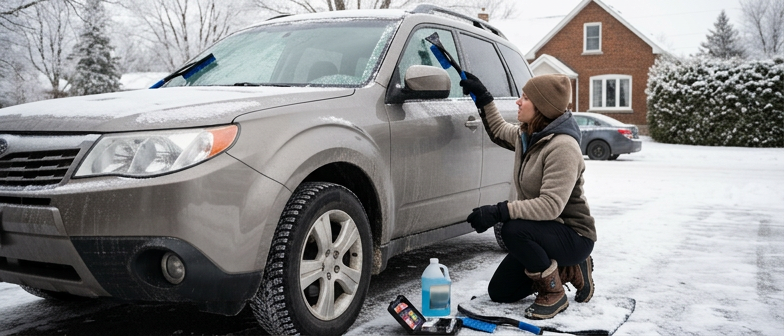
Good visibility is central to winter car preparation basics, because snow, slush, and low sun can quickly reduce what you see and how well others see you. Before driving, fully clear the windshield, rear window, side glass, mirrors, and lights instead of relying on the wipers to push snow aside. Use a proper ice scraper and soft brush to avoid scratching the glass, and run the defroster to loosen ice and mist. Keep washer fluid topped up with a winter-rated product so salty spray and dirty meltwater do not block your view, and replace worn wiper blades before the season so they do not leave dangerous streaks in low light.
To keep the glass clear and reduce glare, clean the inside of the windshield regularly so dust and film do not become a hazy layer under the heater. Use air conditioning with the fresh-air setting and the defogger to pull moisture out of the cabin and cut condensation, especially with wet coats inside. Check that headlights, taillights, brake lights, and indicators are working and correctly aimed, because in snow or freezing rain they help other road users judge your position and speed. If your vehicle has automatic lights, make sure they switch on early enough in dull conditions, and turn them on yourself whenever visibility worsens.
Being seen is as important as seeing clearly, so make visibility checks part of your everyday cold weather routine. Remove ice and packed snow from headlamps, rear lamps, and license plates, and clear heavy snow from the roof so it cannot slide over the windshield when you brake. In heavy snow, sleet, or thick spray, use dipped beams rather than depending on daytime running lights that may not activate the rear lamps. Use front and rear fog lights only when visibility is seriously reduced, turning them off again when conditions improve so you do not dazzle others. Treating windshield visibility preparation and lighting checks as daily habits makes winter journeys more predictable and safer for everyone.
Clearing snow, ice, and condensation safely
A clear view is essential to any safe winter driving routine, so remove snow and ice from all windows, mirrors, lights, and the roof before you move. Use a soft brush for loose snow, then a plastic scraper on the glass, working gently to avoid scratching. Never pour boiling water on frozen windows, as the sudden heat can crack glass or damage the wiper blades you rely on in poor weather. This basic visibility preparation makes it easier to see and be seen in traffic.
For better windshield visibility preparation, start the engine, switch on the rear window heater and mirror demisters if fitted, and use the car’s ventilation on a cool or slightly warm setting with air conditioning to dry the air and cut condensation. Wipe the inside of the glass with a clean microfiber cloth, not your hand or sleeve, to avoid smears that can flare in low winter sun or oncoming headlights. Wait until every window is clear before driving off, and keep winter-grade washer fluid topped up so you can quickly deal with spray, slush, and refreezing moisture while you travel.
Tires, Grip, and Winter Driving Habits
Tires are the only part of your vehicle that touch the road, so their condition strongly affects grip in winter. As part of any cold weather vehicle check, inspect tread depth, wear, and age, and consider winter or all‑weather tires if you often drive on snow and ice. Adequate tread helps clear slush and water and lowers the risk of skidding or hydroplaning. Because tire pressure drops with temperature, checking and adjusting it keeps the contact patch consistent and supports predictable handling and braking on cold, wet, or icy roads.
Good traction is only half of a safe winter driving routine; the other half is how you drive. Even with well‑maintained tires, rapid acceleration, harsh braking, and sharp steering can exceed available grip on slippery surfaces. Building everyday habits such as slowing earlier for junctions, leaving more space to the car ahead, and turning smoothly gives your tires time to work. Planning trips so you are not rushed, fully clearing snow and ice before driving off, and gently feeling for how slick the road is when it is safe all help you stay aware of limited traction and adjust your speed and inputs to match real winter conditions.
Q&A
-
What are the basics of preparing a car for winter?
Focus on a seasonal check of fluids, battery, tires, and visibility. Confirm winter‑appropriate oil and coolant, inspect wiper blades, test the battery, and ensure tires have healthy tread and correct pressure. -
What should a cold weather vehicle check include under the hood?
Verify oil and antifreeze levels, look for cracked belts or hoses, top up winter‑grade washer fluid, and check for any visible leaks or loose connections. -
How can I take care of my battery so the car starts reliably in winter?
Have the battery tested if it is several years old, clean corrosion from the terminals, make sure it is firmly secured, and address any slow cranking before the first hard freeze. -
What can I do to keep my windshield clear in snow and ice?
Use an ice scraper and soft brush, run the defroster, avoid hot water on the glass, and fill the reservoir with winter‑rated washer fluid while fitting good wiper blades. -
What emergency supplies support a safe winter driving routine?
Pack a basic kit with a scraper, small shovel, blanket, flashlight, phone charger, high‑visibility vest, and some snacks and water in case you are delayed or stuck.