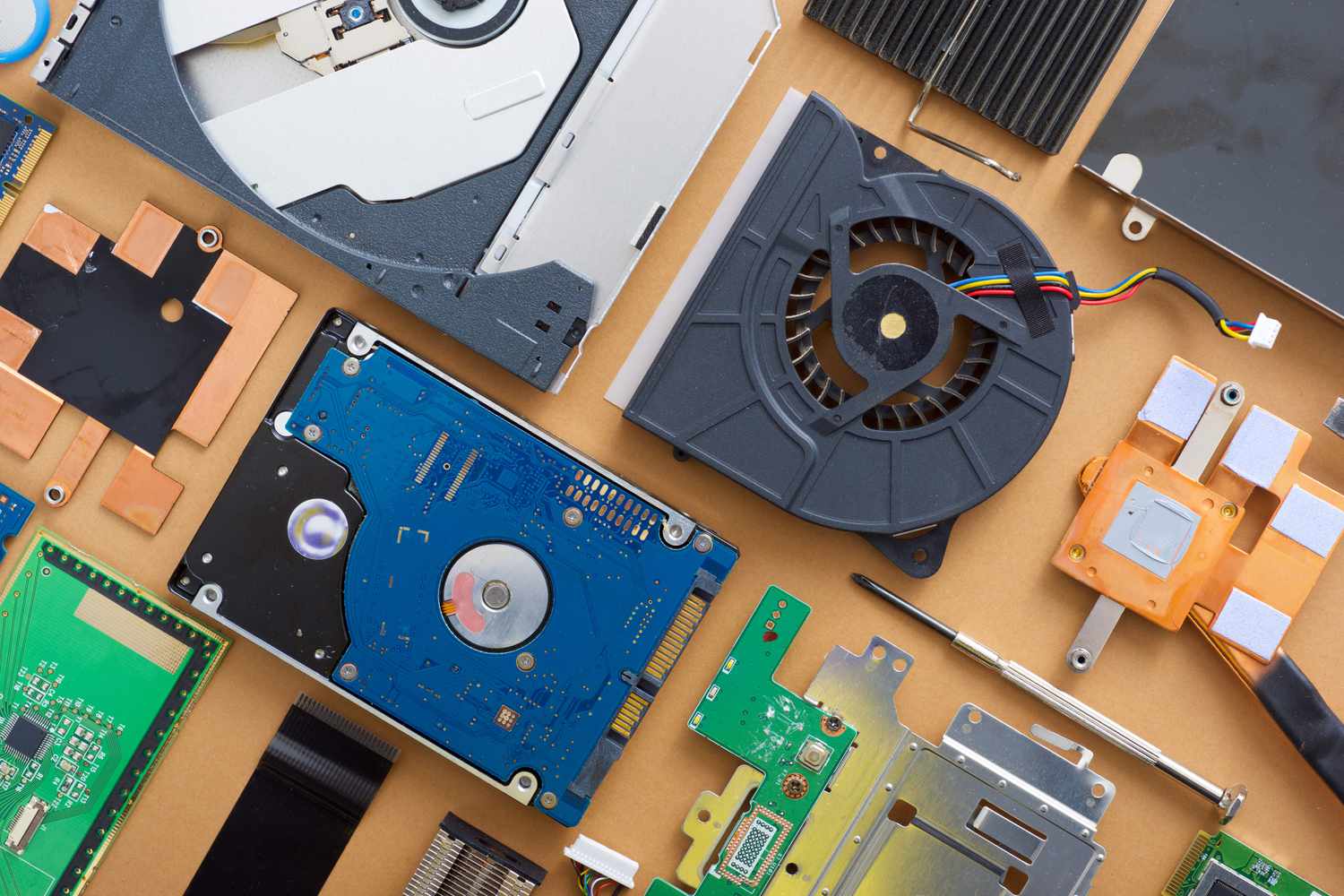
Unveiling New Frontiers: A Closer Look at Hardware Advances
The rapidly evolving technology scene is accompanied by significant leaps in hardware development across various components. Each advancement serves a unique role, contributing to an interconnected ecosystem that bolsters computational performance, efficiency, and scalability.
Graphics Cards: Redefining Visual and Computational Capabilities
Graphics cards have evolved from being niche components focused on gaming to crucial tools in high-performance computing, professional visualization, and AI-driven rendering.
The heart of this evolution resides in the Graphics Processing Unit (GPU), which excels in parallel processing—a necessity for rendering intricate graphics and performing complex calculations within a split second. The ongoing advancements in real-time ray tracing, AI-based anti-aliasing, and increasing video memory capacity are pivotal. NVIDIA, AMD, and Arm have spearheaded innovations such as DLSS, which enhances frame rates and image quality, making them leaders in both consumer graphics and professional computational fields.
Storage Architecture: Innovating Data Management
Storage solutions represent the backbone of data management, crucial for swift access, secure storage, and efficient retrieval of information. The transition from traditional hard drives to advanced storage devices like NVMe SSDs and PCIe 5.0 has catalyzed a tremendous leap in storage efficiency and accessibility.
NVMe SSDs present faster read/write capabilities, drastically reducing boot times and enabling real-time data processing. Major players such as Western Digital, Seagate, and Toshiba are pioneering this movement with innovations that focus on boosting storage capacity and maximizing data throughput. According to performance impact assessments, the gains in using NVMe SSDs include sharper responsiveness and lower latency, thus enhancing productivity.
Cooling Systems: Mastering the Art of Thermal Dynamics
Cooling systems are the silent guardians ensuring hardware reliability and longevity. As processing capabilities soar, so too does the need for effective thermal management to prevent overheating and maintain optimal performance.
Advanced liquid cooling and vapor chamber technology mark the new frontier in thermal management. They provide superior heat dissipation compared to traditional air cooling methods, thereby accommodating the increased power densities of modern processors and GPU configurations. Companies like Cooler Master, Corsair, and Asetek lead these innovations, deploying systems that integrate AI-driven thermal management for adaptive and precise cooling.
RAM Advancements: Enhancing Multitasking Efficiencies
Random Access Memory (RAM) empowers devices to multitask efficiently by providing essential space for active processes and real-time data manipulation. The progression from DDR4 to DDR5 RAM modules is characterized by enhanced bandwidth and reduced latency, translating to improved multitasking and system responsiveness.
As manufacturers such as Micron, Samsung, and Kingston innovate with higher frequency and density RAM solutions, users experience smoother transitions between applications and more seamless computational operations. The evolution in RAM technology continues to be at the forefront of improving system performance and user experiences.
Bridging Technologies: Processor Advancements
Finally, processors—the ultimate facilitators of compute power—are witnessing significant architectural transformations aimed at leveraging data-intensive applications, especially AI.
Modern multi-core architectures and AI-optimized cores are at the center of processor evolution, offering enhanced throughput, reduced latency, and better energy efficiency. Industry titans like Intel, AMD, and Arm continue to develop processors that prioritize efficiency and capability.
In conclusion, the landscape of computer hardware is characterized by rapid transformation and innovation. The advancements in processors, graphics cards, storage, cooling systems, and RAM collectively push the boundaries of what is possible in digital environments. These integral hardware components continue to drive the future of technology, enriching user experiences and redefining possibilities in an interconnected world.
Q&A
-
What role do processors play in computer hardware performance?
Processors, or central processing units (CPUs), are the brains of a computer, executing instructions from programs and performing calculations. The performance of a processor can significantly impact the overall speed and efficiency of a computer. Key factors include the number of cores, clock speed, and architecture, which determine how fast and efficiently a processor can perform tasks.
-
How do graphics cards enhance a computer's performance, especially in gaming and design?
Graphics cards, or GPUs, are essential for rendering images and video. They are particularly crucial in gaming, graphic design, and video editing. A powerful graphics card can handle complex graphics tasks, leading to smoother gameplay and faster rendering times. It offloads these tasks from the CPU, allowing for better multitasking and performance in visual-heavy applications.
-
Why is RAM important for a computer's performance?
RAM (Random Access Memory) is vital for storing data that is actively being used or processed by a computer. More RAM allows a computer to handle more tasks simultaneously without slowing down. It is particularly important for running applications that require large amounts of data to be quickly accessible, such as video editing software or games.
-
What types of storage are available, and how do they affect performance?
There are primarily two types of storage: Hard Disk Drives (HDDs) and Solid State Drives (SSDs). SSDs are faster than HDDs because they have no moving parts, leading to quicker data access speeds, boot times, and file transfers. Opting for an SSD can significantly enhance a computer's responsiveness and overall performance.
-
How do cooling systems impact the performance and longevity of computer hardware?
Cooling systems, including fans and liquid cooling solutions, are crucial for maintaining optimal temperatures in computer hardware. Efficient cooling prevents overheating, which can throttle performance and damage components over time. By keeping the CPU, GPU, and other parts cool, a well-designed cooling system ensures consistent performance and prolongs the life of the hardware.