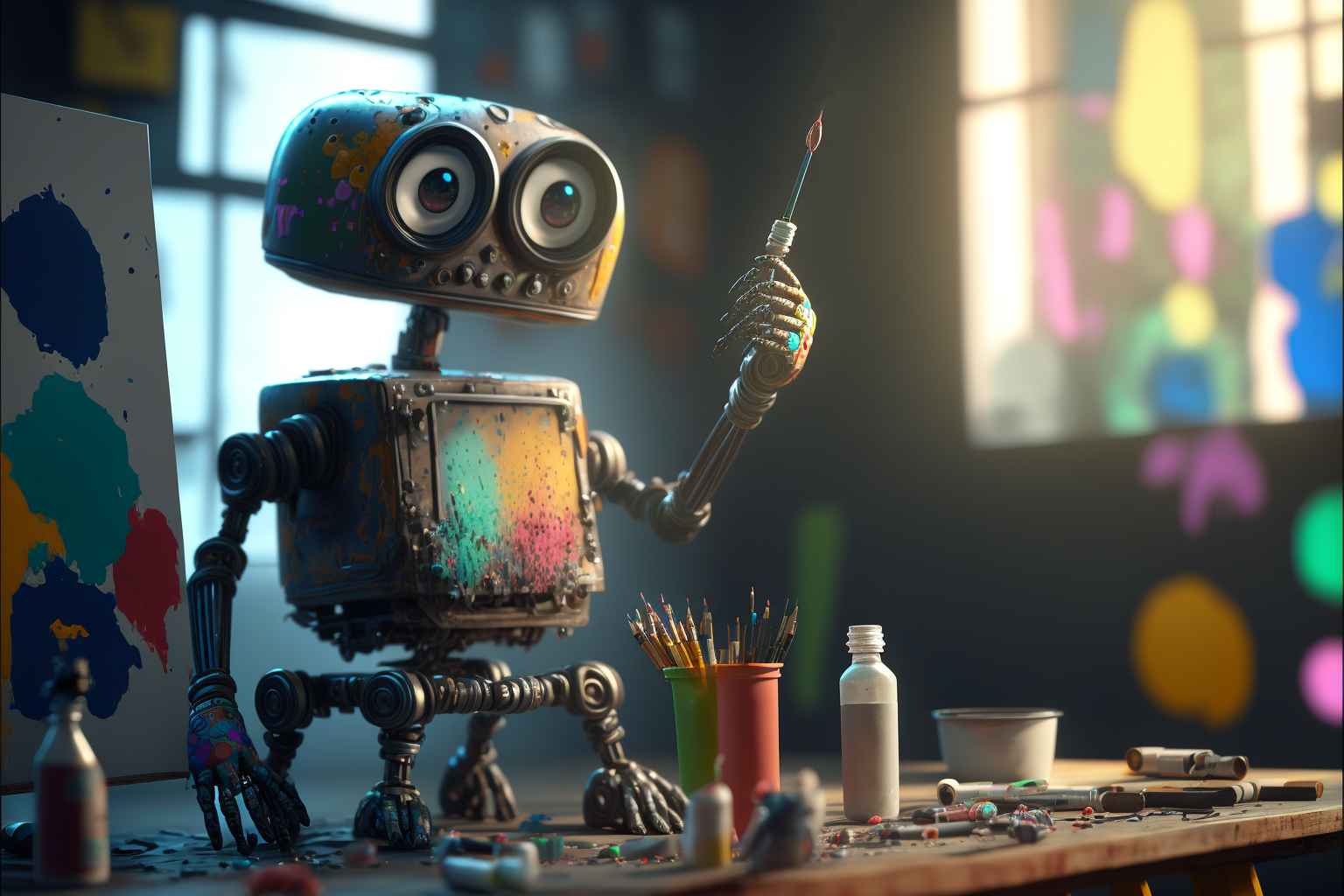
Unveiling Artificial Creativity
AI has begun to redefine what it means to be creative by transforming traditional artistic processes through novel capabilities. Let's explore how digital algorithms and humanity's age-old urge to create are intertwining to usher in a new era of artistic expression.
AI as a Creative Collaborator
The era of AI as merely an automated tool is evolving into one where AI serves as a creative collaborator. This partnership empowers artists by digitizing imaginative thoughts into tangible forms efficiently. Imagine artists guiding AI models to generate a spectrum of visual interpretations of a single concept—a practice that frees artists to focus intently on emotional and narrative elements while relegating technical rendering to machines. This allows even smaller creative enterprises to produce high-caliber content by leveraging AI capabilities.
Democratizing the Creative Process
AI's integration into creative processes has dramatically lowered entry barriers. No longer is digital creativity strictly the domain of experts; AI democratizes artistic tools, offering expansive opportunities for artists and businesses alike to devise visually compelling marketing materials, innovative designs, and immersive content. By facilitating a broader array of participants, AI is nurturing a vibrant ecosystem where diverse voices and perspectives can flourish without the constraints of hefty budgets.
The Human Creative Imperative
Even as AI steps in to handle technical tasks of art creation, the essential human element remains pivotal. The artistry now lies in the human’s ability to fine-tune AI outputs to achieve personally meaningful artistry and resonance. While AI automates the initial steps of creation, it falls upon human intellect to refine, infuse intent, and ensure the authentic communication of ideas and emotions. This collaboration underscores the indispensable role of humans in upholding the depth, instinct, and intuition that define true art.
Intersection of Algorithms and Imagination
As AI becomes more embedded within creative industries, it acts as a dynamic partner in the art of ideation, execution, and iteration. In this section, we will explore the vast capabilities AI provides to enhance human creativity, while also noting the complexities introduced.
Fueling Imagination with Data
By rapidly processing vast datasets, AI inspires fresh insights, enabling creatives to access a multitude of perspectives more swiftly than through human endeavor alone. This convergence of data and creativity fosters an environment ripe for discovery and innovation. Algorithms are refining their ability to interpret and generate evolving creative content that resonates with current trends and cultural contexts, thereby influencing visual storytelling and creative outputs more broadly.
Multimedia Innovation and Hybrid Teams
Hybrid teams of humans and AI are now the norm in many realms, proving to be the most effective for fostering innovation. Machines handle repetitive tasks and voluminous data assessments, while human creativity and emotional intelligence steer the strategic vision and intricate nuances. This synergy supports innovation across diverse fields, from marketing to film production, with each partner contributing its strengths for richer, more complex outcomes.
The Ethical Horizon of AI-Generated Art
While AI's creative potential is vast, it also raises significant ethical considerations about rights, ownership, and the authenticity of AI-generated works. Legal and ethical frameworks are still catching up to technology's rapid pace, struggling to balance innovation with the safeguarding of human creative expression. Questions of authorship, copyright protection, and proprietary rights remain at the forefront of this ethical dilemma, emphasizing the need for evolving policies that honor both machine and human contributions fairly.
Towards a Collaborative Future
AI’s role in the arts is not to overshadow human creativity but to expand its possibilities and reach. This section unwraps the potential of AI as an augmentation tool and how humans can harness it to unlock unparalleled pathways of innovation.
AI Augmenting Human Creativity
The promise of AI lies in its capacity to augment and not replace human ingenuity. By automating routine and explorative tasks, AI permits creators to immerse themselves in conceptual and strategic endeavors. For example, generative AI tools like DALL·E 3 and Midjourney enable artists to visualize concepts that might have been previously difficult to illustrate manually. This turns AI into a muse, assisting artists to explore uncharted artistic territories.
Preserving the Authentic Human Touch
Despite AI’s creative prowess, the indispensable human touch grounds the work in warmth and authenticity. Authenticity stems from an individual’s experiences and creative intentions, aspects that AI alone cannot replicate. As machines churn out content, the human creator’s role shifts toward ensuring the output carries the depth, emotions, and cultural relevancy that resonate with audiences on an intrinsic level.
Question and Answer
-
What is Generative Art and how does it utilize AI algorithms?
Generative Art is a form of art that is created using algorithms, often leveraging artificial intelligence (AI) to produce unique and often complex designs. These algorithms can autonomously generate art by following a set of programmed rules or constraints, which can be influenced by the artist's input. AI algorithms enable artists to explore new creative possibilities by rapidly generating multiple variations of a concept, which can be fine-tuned by the artist. This collaboration between AI and human creativity allows for the creation of intricate and innovative art pieces that might be challenging to produce manually.
-
How is AI transforming the music industry through AI Music?
AI Music refers to music that is composed or generated with the help of AI technologies. AI can analyze vast amounts of musical data to learn patterns and styles, which it then uses to compose original pieces. This technology is transforming the music industry by enabling new forms of creativity, such as personalized music experiences where AI generates music tailored to individual preferences or moods. Moreover, AI assists musicians in overcoming creative blocks by offering new musical ideas and variations, thus expanding the creative palette available to artists and producers.
-
What ethical considerations arise from the use of AI in creative fields?
The integration of AI in creative fields raises several ethical considerations, particularly around the issues of authorship and originality. One major concern is the question of who owns the rights to AI-generated works. If an AI system creates a piece of art or music, it's unclear whether the credit should go to the AI, its developers, or the end user who provided the input. Additionally, there is the risk of AI-generated content infringing on existing works without proper attribution, which can devalue the work of human creators. Ensuring that AI systems are used ethically involves developing clear guidelines and legal frameworks that protect intellectual property while encouraging innovation.
-
What are some design tools enhanced by AI, and how do they impact the design process?
AI-enhanced design tools, such as Adobe Sensei and Canva's Magic Write, are transforming the design process by automating routine tasks and providing intelligent suggestions. These tools use machine learning algorithms to analyze design elements and offer real-time recommendations, such as color palettes, layout adjustments, and content suggestions. This allows designers to focus more on the creative and conceptual aspects of their work, enhancing productivity and enabling more sophisticated and polished designs. By streamlining the design process, AI tools democratize access to professional-grade design capabilities, making it easier for individuals and small businesses to produce high-quality visual content.
-
In what ways do AI algorithms contribute to originality in creative work, and what challenges do they face?
AI algorithms contribute to originality in creative work by enabling the exploration of novel ideas and styles that might not be immediately apparent to human creators. They can identify unique patterns and generate unexpected combinations, pushing the boundaries of traditional creative processes. However, these algorithms face challenges in ensuring that their outputs are genuinely original and not simply derivative of existing works. This requires careful programming and oversight to prevent plagiarism and to ensure that AI-generated content respects intellectual property rights. Furthermore, the challenge lies in balancing AI's role as a creative tool with the need to maintain the human touch that imbues art with emotional depth and meaning.