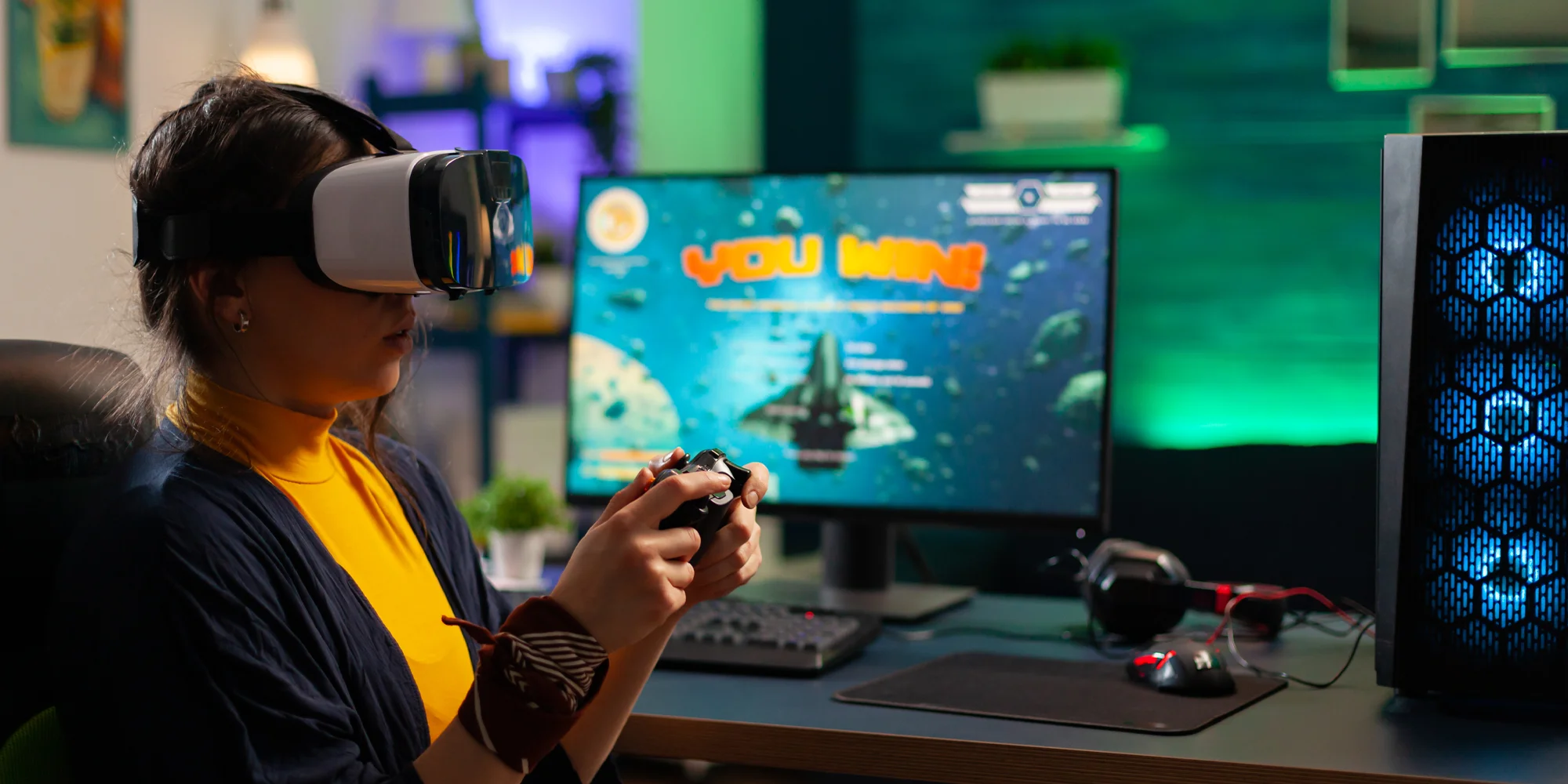
Art Meets Tech: The Advent of Next-Gen Consoles
Next-generation consoles mark a significant turning point, reshaping experiences beyond mere graphical enhancements. These innovations are not only preserving classic gameplay but also integrating cutting-edge technology.
1. Bridging Old and New: The Classic Experience Revitalized
Retro gaming is gaining popularity, aided by technological advancements enabling classic consoles to function seamlessly with modern displays. Solutions for connectivity are reducing setup complexity, allowing devices like GameCube and Xbox to connect with minimal latency and high fidelity. This involves adapting older consoles with high-quality video outputs and evolving power standards to ensure longevity and modern compatibility.
The revival of classic consoles combined with next-gen technological frameworks ensures these nostalgic experiences retain their charm while benefiting from improved visual and auditory output. This fusion showcases how new hardware can breathe life into beloved classics, maintaining their integrity while enhancing the overall gaming experience for both nostalgia seekers and new players alike.
2. Handheld Innovations: Evolving Portability
The handheld gaming market is undergoing a transformation with the integration of advanced processors and superior graphics, bridging the gap between portable devices and traditional consoles. New devices are now equipped with high-performance CPUs and GPUs, as well as high-resolution displays that deliver near-console-quality gaming on-the-go.
By leveraging robust architecture, including AMD Ryzen processors and advanced graphics technologies, these handhelds offer gamers unparalleled portability with performance levels previously confined to stationary setups. The result is an ever-expanding universe of gaming possibilities, accommodating players' desires for high-quality gaming experiences beyond the confines of their living rooms.
3. Technological Cross-Pollination: Laptops and Beyond
As consoles evolve, so too do other computing devices like laptops, drawing directly from advancements in gaming technology. Powerful processors and GPUs such as Intel's Core series and NVIDIA's RTX line are setting new standards, enabling realistic visual rendering and smooth gameplay.
These shared technological advancements signify a broader revolution across computing devices, providing users with enhanced capabilities that extend beyond gaming. By integrating top-tier gaming technologies into everyday devices, the boundaries for high-quality digital computing are expanding, marrying gaming excellence with traditional computing tasks.
Gaming in the Clouds: Redefining Access Through Innovation
Cloud technology fosters a paradigm shift in how games are played and accessed, removing barriers and enhancing overall accessibility.
1. The Cloud Era: Instant Gratification Without Hardware Constraints
The rise of cloud gaming is transforming accessibility by allowing users to stream games directly to their devices without needing expensive hardware. Major technology firms have embraced this change, resulting in the expansion of services that enable high-quality gaming experiences on-demand.
Partnerships with leaders in technology are expanding the capabilities of cloud platforms, allowing developers to offer instant game access irrespective of users' hardware capabilities. This development democratizes access by making high-end gaming available to a broader audience, facilitating a more inclusive and connected gaming environment where latency and performance are no longer restrictive factors.
2. Infrastructure and Innovation: Collaborative Expansion
Investment in cloud architecture is spearheading technological growth. Enterprises are forming strategic alliances to enhance the infrastructure supporting scalable cloud solutions. Through renting virtual GPU clusters, companies can affordably harness AI-powered gaming architectures that enhance both player experience and game development processes.
The role of advanced GPUs is paramount in these dynamic online environments, ensuring smooth delivery of visuals and fast data processing. This infrastructure supports the driving advancements that will continue to define and expand the cloud gaming experience.
3. Mobile Synergy: 5G and On-the-Go Gaming
The rollout of 5G networks promises to revolutionize mobile gaming, enhancing speed and connectivity. With 5G, even the most demanding games can be streamed with high fidelity, ensuring an experience on par with traditional consoles.
This evolution ties seamlessly with the goals of cloud gaming, facilitating cross-platform access and multiplayer experiences unparalleled in previous mobile gaming iterations. Players enjoy seamless transitions between their mobile platforms and home consoles, enhancing accessibility and playability across the board.
Immersive Worlds: Fusing AI and VR
AI and VR are at the forefront of creating transformative multiplayer experiences, offering unprecedented environmental interactivity and realism.
1. Stepping into New Realms: The VR Experience
VR technology immerses players into game worlds, offering unparalleled levels of engagement. With the addition of VR headsets and immersive controls, players can navigate game spaces with a sense of presence that traditional gaming lacks.
This heightened sense of reality transforms the landscape of interaction, providing players with a more engaging and emotionally resonant experience. The potential for VR to revolutionize gaming interaction is immense, opening new avenues for both solo and cooperative gameplay.
2. Dynamic Worlds Via AI
AI brings intelligence and adaptability to game environments, making experiences more compelling and lively. Characters powered by AI demonstrate realistic behaviors, respond dynamically to player actions, and evolve alongside the player's choices, enhancing the game’s interactive narrative.
AI allows for content creation and personalization, sculpting experiences unique to each player by tailoring challenges and story arcs to individual preferences. This ongoing evolution creates rich, dynamic worlds that players can fully immerse themselves in, continually rewarding exploration and interaction.
3. Multiplayer Revolution: VR's Social Dimension
VR facilitates nuanced social interactions in multiplayer settings, allowing for rich, shared experiences. The ability to communicate through body language and context allows players to cultivate meaningful in-game relationships, transcending geographical boundaries.
Improvements in VR technology create a sense of camaraderie, enhancing collaborative efforts within game environments. By fostering such interactions, VR reshapes the social fabric of multiplayer gaming, forging connections that enhance group experiences and fuel the next generation of interactive entertainment.
Bridging Realities: The Convergence in Modern Gaming Ecosystems
The integration of VR and cloud technologies into modern consoles is transforming traditional gaming systems, facilitating an ecosystem ripe for innovation.
1. Enhanced Console Capabilities through Cloud Integration
Consoles are increasingly leveraging cloud services to expand game accessibility and enhance user interactions. Features like game streaming and cloud saves ensure uninterrupted gameplay across devices, while online multiplayer capabilities foster global connectivity.
These advancements position consoles as central to a seamless gaming ecosystem where barriers among device types diminish, ensuring continuous gaming experiences across platforms.
2. The Rise of VR-Compatible Consoles
The integration of VR into console ecosystems unlocks new gaming possibilities, allowing players to utilize VR headsets for an immersive experience using existing hardware. This compatibility creates an accessible entry point for players new to VR, promoting widespread adoption of the technology.
Efforts to refine VR capabilities will only continue to improve, broadening the scope of gaming hardware that supports rich virtual environments and ensuring consoles remain versatile in an evolving digital landscape.
3. The Technological Tapestry: A Unified Frontier
The fusion of cloud capabilities, VR potential, and AI innovation forms a cohesive gaming landscape, dissolving the lines between traditionally isolated technologies. This amalgamation fosters an expansive, interconnected gaming ecosystem that enables unprecedented levels of player engagement and interaction.
Consoles, with their diverse technological offerings, stand poised to define the future of interactive digital entertainment, bridging the gap between different gaming experiences and paving the way for deeper, more intertwined gaming narratives. As these synergies continue to evolve, they promise a future where gaming experiences are more immersive, inclusive, and engaging than ever before.
Q&A
-
What are the key differences in graphics capabilities between current gaming consoles?
The main differences in graphics capabilities among current gaming consoles such as the PlayStation 5, Xbox Series X, and Nintendo Switch lie in their hardware specifications and supported technologies. The PlayStation 5 and Xbox Series X both offer 4K resolution, ray tracing, and high frame rates up to 120fps, thanks to their powerful GPUs. The Nintendo Switch, on the other hand, prioritizes portability and offers a maximum resolution of 1080p in docked mode, with less emphasis on high-end graphics performance.
-
How does VR integration enhance the gaming experience on consoles?
VR integration transforms the gaming experience by providing an immersive, 360-degree view of the game world, allowing players to physically interact with their environment. This is achieved through VR headsets and motion controllers that track the player's movements. For consoles like the PlayStation with its PSVR, VR integration enables unique gameplay experiences that are not possible with traditional controllers, such as fully immersive simulations or interactive storytelling.
-
What role does cloud gaming play in the future of gaming consoles?
Cloud gaming is poised to revolutionize the gaming industry by allowing players to stream games directly from powerful servers without the need for high-end hardware. This means that as long as players have a stable internet connection, they can enjoy graphically intensive games on any device, including consoles, without worrying about hardware limitations. Services like Xbox Cloud Gaming and PlayStation Now are already paving the way for this shift, providing access to a vast library of games instantly.
-
How have multiplayer features evolved in modern gaming consoles?
Modern gaming consoles have significantly enhanced multiplayer features through seamless online connectivity, allowing players to connect with friends and compete against others globally. Features such as cross-platform play, integrated voice chat, and matchmaking systems have become standard, creating a more social and competitive environment. Additionally, consoles now support large-scale multiplayer experiences, such as battle royale games, which are highly popular among gamers.
-
In what ways are AI opponents improving the gaming experience on consoles?
AI opponents in gaming have become more sophisticated, offering challenging and dynamic gameplay that adapts to the player's skill level. Advanced AI can learn from player actions and develop strategies, providing a more engaging and unpredictable experience. This enhancement is evident in genres such as first-person shooters and strategy games, where AI can mimic human-like behavior, making single-player campaigns as exciting as multiplayer battles.