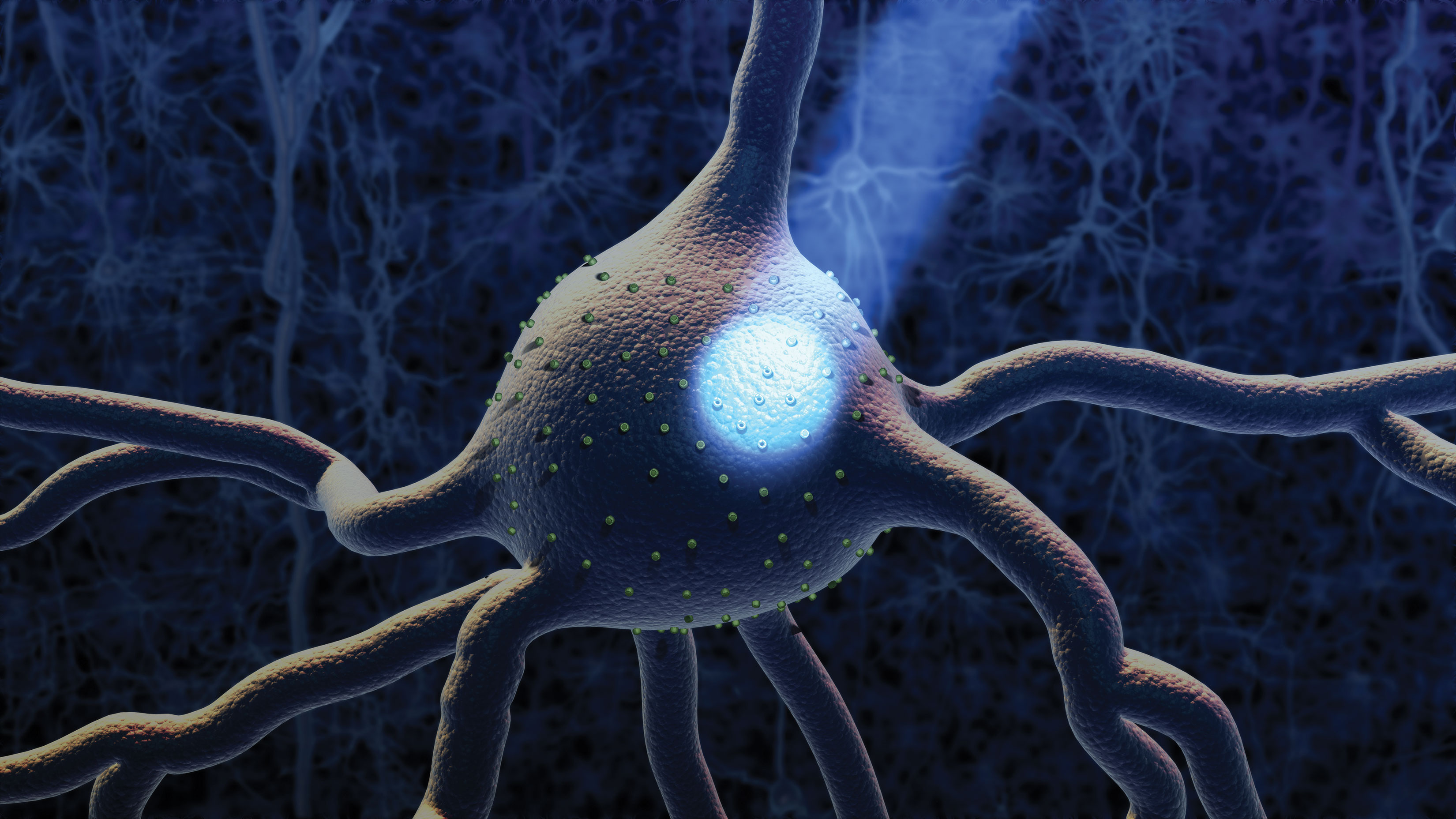
Shining Light on the Brain: The Mechanism of Optogenetics
Optogenetics presents a groundbreaking bridge between genetics and neurology through the use of light to control neural activity. A core discovery in this field focuses on light-sensitive proteins called opsins.
1. The Core Discovery: Light-Activated Opsins
Opsins are proteins originating from microorganisms that have evolved to convert light into electrical signals, a capability scientists have adapted for use in mammalian neurons. By introducing these opsins into specific neurons, these cells become responsive to certain wavelengths of light. When illuminated, opsins can either trigger or halt the neuron's natural electric signals, rendering the neuron either active or silent. Think of this as having a remote-controlled dimmer switch directly wired into the neural circuits. This precision in control allows researchers to influence specific regions of the brain, holding profound implications for neurological research.
2. Capturing Light in Neurons: Genetic Engineering Precision
The successful integration of opsins into neurons is achieved through sophisticated genetic engineering. Scientists employ viral vectors as delivery cars, ferrying the opsin genes directly to target neurons. These vectors are specially designed and modified to ensure they infect only the intended cells, leading to the selective expression of opsins precisely where required. This approach sets optogenetic methods apart from previous broader, less targeted techniques, providing a higher degree of specificity and control. Thus, this ensures no unnecessary disturbance occurs in the brain's complex network, with implications for both basic neuroscience applications and potential therapeutic interventions.
3. Practical Implementation: From Theory to Experimentation
Creating a functional optogenetics system goes beyond genetic engineering to include technological mastery in optical tools. Researchers utilize fine optical fibers to direct light precisely onto targeted brain areas. These systems must be carefully configured to ensure effective light delivery without damage or interference, underlining the importance of engineering in biological applications. Alongside vector technology, the development and use of advanced instrumentation have been pivotal in bringing optogenetics from the realm of theoretical potential to that of practical reality, allowing neuroscientists to conduct experiments with unprecedented precision and depth.
Light-Sensitive Proteins and Mapping Neural Pathways
The foundational use of light-sensitive proteins in optogenetics allows for unprecedented accuracy in brain mapping, revealing how different parts of the brain interact and communicate.
1. Exploiting Natural Concepts for Neurological Insights
Opsins, considered the workhorses of optogenetics, enable researchers to map complex brain circuits intricately. Channels like channelrhodopsins can be controlled layer by layer, revealing how neurons that lie in different brain areas connect and communicate. This mapping provides insights into normal brain functions and the breakdowns associated with neurological disorders. Essentially, it brings the abstract connectivity of the brain into the tangible realm of scientific investigation.
2. Delivering Light: Operational Strategies
Practical deployment of optogenetic techniques requires careful light delivery to targeted neurons. Using surgically implanted optical fibers, scientists can deliver light directly to the desired brain region, allowing for selective neuron activation or deactivation. This technical sophistication enables scientists to map out neural networks in extraordinary detail. The precision achieved through optogenetic interventions provides invaluable insights into brain functions and potential dysfunctions.
3. Challenges and Refinements
While groundbreaking, the optogenetic approach is not without its challenges. Delivering the genetic tools safely, ensuring targeted protein expression, and illuminating deep brain regions require continuous research and technological ingenuity. Moreover, scientists strive to refine opsins for increased sensitivity and efficiency, leading to more nuanced and nuanced studies of neural functioning. While challenges remain, the pioneering energy within the field fosters consistent progress, expanding the frontiers of neuroscientific understanding.
Genetic Tools in Behavioral Neuroscience: Circuit Control
Optogenetics represents a new frontier in behavioral neuroscience, providing tools to dissect and influence the neural circuits underlying behaviors.
1. Linking Neural Activity to Behavioral Outputs
The precision offered by optogenetics enables researchers to link specific neural circuits to distinct behaviors, a feat less feasible with older techniques. By controlling neuronal activity with light, scientists can induce or suppress behaviors, dissecting the neural circuitry underlying complex actions. Activating neurons in specific brain regions can lead to observable changes in behavior, offering a direct correlation between neural activity and resultant behavioral patterns. This ability is crucial for understanding the neural basis for behaviors such as learning, memory, and emotion.
2. Advancing Treatment Perspectives
The applicability of optogenetics surpasses the scope of pure research, offering avenues for therapeutic innovations in neurological and psychiatric disorders. By identifying and controlling circuits affected by diseases like Parkinson's, depression, or anxiety disorders, optogenetic methods might lead to new interventions aiming to restore or modify brain function. There is potential to selectively intervene in misfiring circuits, which may open new doors for personalized, precision-based treatments in clinical settings.
3. Ethical Considerations in Neural Manipulation
As with any significant scientific advancement, the ethical implications of optogenetics need careful consideration. Manipulating brain activity and behavior raises important ethical questions about the extent and manner of these interventions, especially when translating from animal models to humans. Safeguarding ethical integrity requires transparency, interdisciplinary discussions, and public engagement to ensure these innovations benefit society responsibly and equitably.
In reflection, optogenetics, with its innovative techniques and potential applications, marks an exciting era for neuroscience research. Providing precise control over light and genes offers insights that could reshape our understanding and treatment of the brain's complexities, guiding future advancements with an illuminating pulse.
Question and Answer
-
What is optogenetics, and how does it enable neuron activation?
Optogenetics is a cutting-edge technique in neuroscience that allows researchers to control the activity of specific neurons using light. This is achieved by introducing light-sensitive proteins, known as opsins, into neurons. When these opsins are exposed to certain wavelengths of light, they can either activate or inhibit the neuron's electrical activity. This precise control over neuronal activity enables scientists to study brain circuits with unparalleled accuracy, leading to new insights into brain functions and potential therapeutic applications.
-
How do light-sensitive proteins contribute to brain mapping?
Light-sensitive proteins, or opsins, are integral to the process of brain mapping in optogenetics. By genetically modifying neurons to express opsins, researchers can use light to selectively activate or silence specific neurons. This technique allows for the detailed mapping of neural circuits, helping scientists understand how different parts of the brain are interconnected and how they contribute to various behaviours and cognitive processes. This understanding is crucial for both basic neuroscience research and the development of treatments for neurological disorders.
-
What role do genetic tools play in optogenetics and behavioural neuroscience?
Genetic tools are essential in optogenetics as they enable the precise targeting of opsins to specific types of neurons. This precision is achieved by using viral vectors to deliver the opsin genes to neurons, ensuring that only targeted neurons express the light-sensitive proteins. In behavioural neuroscience, this allows researchers to manipulate specific neural circuits and observe the resulting changes in behaviour, providing insights into the neural basis of behaviours and potential therapeutic targets for disorders.
-
Can optogenetics be used for treating neurological disorders, and if so, how?
While optogenetics is primarily a research tool, it holds promise for treating neurological disorders. By identifying and manipulating the specific neural circuits involved in disorders like Parkinson's disease or depression, optogenetics can potentially restore normal brain function. For instance, by using light to activate neurons that compensate for those lost to disease, it might be possible to alleviate symptoms. However, clinical applications are still in development, and further research is needed to translate these findings into treatments.
-
What are some ethical considerations associated with the use of optogenetics in neuroscience?
The use of optogenetics raises several ethical considerations, particularly related to the potential for controlling brain activity. There are concerns about the misuse of this technology, especially regarding its application in humans. Ethical guidelines must ensure that research is conducted responsibly, with respect for animal welfare and human consent. As optogenetics moves closer to clinical applications, discussions about informed consent, potential side effects, and the broader implications of influencing human behaviour with light will be critical.