Reading Your Cravings Instead of Fighting Them
Energy dips versus genuine hunger
That foggy feeling in the afternoon or the late-night fridge visit often has a pattern behind it. The body tends to “crash” when energy, blood sugar, or stress are out of balance. A sudden pull toward very sweet or salty foods can be a sign that the last meal was too small, mostly refined carbohydrates, or too far in the past.
Cravings also show up when appetite is not the main issue. Long stretches of screen time, a repetitive task, or finally sitting down after a hectic day can bring up the thought of food. In those moments, the body may be asking more for rest, water, or a short mental break than for extra calories.
A simple check-in can help:
- Pause and rate hunger on a scale.
- Drink water and wait a few minutes before eating.
- Notice whether the desire is for a specific taste or for any kind of food.
This small pause makes it easier to notice whether you are feeding tiredness, emotions, or true physical need.
What particular urges might be saying
Wanting something very sweet in the afternoon often matches up with tiredness and a drop in blood sugar. Cookies or candy can bring a brief lift that fades quickly. A planned option that includes protein, fiber, and a modest amount of carbohydrate tends to give a more even lift.
Evening urges can be closely linked to stress and routine. If snacking always happens on the couch or in front of a screen, the body learns that cue. Small shifts can interrupt that script:
- Brush your teeth after dinner to signal that eating time is winding down.
- Keep foods that are easy to overeat out of direct sight.
- Choose a tangy or crunchy option instead of something very sugary.
Noticing patterns turns cravings into useful signals rather than battles to win or lose. Once the signal is clearer, it becomes easier to choose a balanced option or decide that a break or glass of water is enough.
Building a Satisfying Bite: Simple Formulas
A basic structure that keeps you going
A small bite between meals feels satisfying when it helps both hunger and energy. A simple structure can help with that:
Protein or healthy fat + fruit or vegetable.
Protein and fats slow digestion and help you stay full longer. Fruits and vegetables add natural sweetness or crunch along with fiber. Instead of only grabbing crackers, you might pair them with a spread or cheese and add carrot sticks or apple slices on the side.
Another pattern is:
Carbohydrate + protein.
Carbohydrates provide quick fuel, while protein helps keep focus steady. Ideas include yogurt with berries, roasted chickpeas with grapes, or a small wrap with a protein filling and some crisp vegetables.
Using these combinations takes some of the guesswork out of choosing. When you look at a potential snack, you can simply ask:
- Where is the protein or healthy fat?
- Where is the fruit or vegetable?
Turning patterns into ready-to-reach options
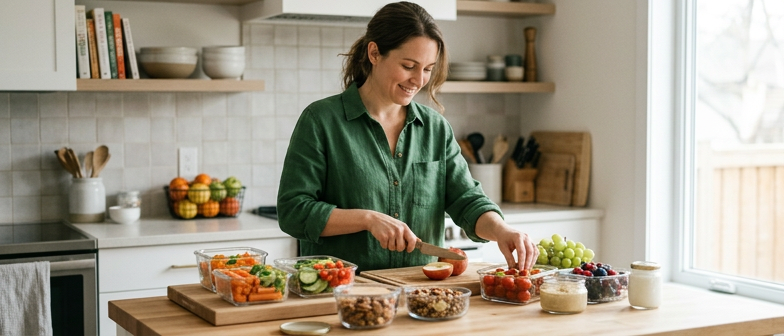
Simple formulas work best when the ingredients are prepared ahead of time. A small drawer, bin, or section in the fridge for go-to options means the balanced choice is often the easiest one.
One idea is a “snackle box” or divided container. You might:
- Start with a base such as plain crackers or simple chips.
- Add a protein choice like cheese cubes, edamame, a boiled egg, or nuts.
- Fill the remaining spaces with cut fruits and vegetables.
- Include a dip, such as a bean-based spread or thick yogurt mixture, and a small sweet element if you enjoy it.
Another approach is homemade bars or bites: nut or seed butter mixed with oats or puffed grains and held together with dates or a small amount of a sweetener. Extras like seeds can add fiber and crunch. Cutting the mixture into small squares helps each piece feel like a complete unit.
A quick reference can make planning easier:
| Combo idea type | Example structure | When it often helps |
|---|---|---|
| Protein + produce | Dip or cheese with sliced vegetables or fruit | Long meetings or study blocks |
| Carbs + protein | Whole-grain base with yogurt, beans, or poultry | Before activity or commute |
| Fiber-rich “bites” | Oat and seed squares with a small sweet binder | Afternoon or evening cravings |
| Mixed snack box | Crackers, protein item, produce, and a dip in one place | Flexible option for busy days |
Fitting Bites into Real-Life Routines
Making commute time work for you
Busy days often go off track when hunger hits between meetings or right after traveling. Planning a few portable options can keep energy steadier and make it easier to walk past the nearest convenience shelf or vending machine.
For mornings out the door, ideas that can be made ahead and stored in the fridge work well. Choices such as yogurt cups, small jars of overnight oats, boiled eggs, mix-and-match nuts and dried fruits, or roasted chickpeas can be packed quickly. Pairing a carbohydrate with some protein and a little fat helps: fruit with a nut spread, a bean-based dip with whole-grain crackers, or popcorn with a modest portion of nuts.
Shelf-stable backups are also useful. A drawer at work or a bag pocket can hold:
- Simple bars with short ingredient lists.
- Nut and seed mixes.
- Whole-grain crackers.
- Plain oatmeal packets.
Having these on hand makes it easier to handle longer-than-expected meetings or delays.
Creating calm patterns at home
On home days, the kitchen can feel like both a comfort and a distraction. A small “snack box” in the fridge or on a cabinet shelf can reduce repeated browsing and make more balanced options the default.
You might stock a container once or twice a week with cut vegetables and a dip, cheese sticks, fruit cups, small portions of grain salads, or mixed-berry bowls. A simple plate works well too: a few pieces of leftover poultry or another protein, cheese cubes, crunchy vegetables, and whole-grain crackers arranged together.
For families, a shared routine can help:
- Decide on a regular time to refill small containers.
- Place options for the next day in one visible spot.
- Store less balanced choices in a less convenient place.
A brief guide can help different situations:
| Situation or setting | Helpful focus | Example approach |
|---|---|---|
| Long workdays | Portable, not messy, easy to store | Yogurt cups, trail mix, shelf-stable packs |
| Remote work or study | Pre-portioned fridge options | Labeled boxes with mix-and-match items |
| After-school window | Kid-friendly choices and structure | Shared plate with protein and produce |
| Late evenings | Routines that signal “kitchen is closed” | Herbal tea, teeth brushing, prepared water bottle |
Training Taste Buds and Portion Habits
Checking in with hunger and satisfaction
Helping taste buds along starts before any food is on the plate. A short pause can reset autopilot. Questions like “Am I physically hungry?” or “When did I last eat?” can be a quick filter. If the answer points more toward boredom or stress, a glass of water, a stretch, or a brief walk might be more satisfying than eating.
When you do choose to eat, serving a portion before you start can be a helpful boundary. Pour a small bowl of nuts instead of taking the whole bag, or place a few chocolate squares on a plate and put the rest away. Single-serve containers or pre-portioned bags can serve the same purpose.
While eating, a quiet check-in every few bites can guide how much is enough. Many people notice a shift from “this really hits the spot” to “it tastes fine, but the first bites were better.” That turning point is often a cue that the body is reaching the point of comfort.
Slowing down to really notice each bite
Taste and satisfaction deepen when eating slows enough for the senses to catch up. Practical ideas include:
- Take one bite, then set the utensil or snack down briefly.
- Focus on the texture and flavor.
- Remove extra distractions when possible.
Pairing protein with fiber, such as yogurt with berries or apple slices with a nut spread, tends to stretch out fullness and make it easier to feel content with a modest portion. These combinations can support more even energy and reduce the urge to keep reaching into a bag.
Over time, reducing very sweet options can change how foods taste. Many people notice that fruit and less sweet foods begin to taste richer and sweeter on their own. As taste buds adjust and eating slows down, smaller portions often feel more satisfying. In that space, snacks start to support the flow of the day instead of becoming a source of stress or second-guessing.
Q&A
-
How can Healthy Snack Planning reduce the mid-afternoon energy slump without relying on sugar?
Thoughtful Healthy Snack Planning focuses on combining slower-digesting carbohydrates with protein, fiber, and some healthy fat to create steadier fuel. Preparing options like nuts with fruit, yogurt with oats, or hummus with vegetables in advance prevents last-minute sugar grabs, stabilizes blood sugar, and supports more reliable Balanced Afternoon Energy during busy workdays. -
What does Balanced Afternoon Energy actually feel like in daily life?
Balanced Afternoon Energy usually means you can move from meetings to commute or family time without feeling desperate for coffee or sweets. Hunger builds gradually, thinking remains clear, and mood swings are less intense. You still get naturally tired later in the day, but crashes, irritability, and urgent cravings are noticeably less frequent and easier to manage. -
How can Portion Control Habits fit into a Simple Office Snack Idea without feeling restrictive?
Portion Control Habits work best when they feel automatic, not punishing. At the office, using small containers, snack-size jars, or divided lunchboxes turns Simple Office Snack Ideas into built-in limits. Pre-portioning nuts, crackers, or sweets ahead of time keeps snacks satisfying yet contained, while still leaving flexibility to add produce or protein if hunger is higher. -
What are practical steps for starting a Family Snack Prep Routine that respects different appetites?
A Family Snack Prep Routine can begin with one shared “snack refill” time a couple of evenings per week. Offer a few base choices—such as fruit, chopped vegetables, cheese, or boiled eggs—then let each person assemble their preferred combinations. Labeling containers with names and rough portion guidelines honors varied appetites without turning snacks into arguments. -
How do Grocery Snack Selection Tips connect with Mindful Eating Basics to support long-term habits?
Grocery Snack Selection Tips grounded in Mindful Eating Basics emphasize shopping with intention rather than reacting to impulses. Making a short list of protein, fiber-rich carbs, and a few treats, then reading labels for added sugars and ultra-long ingredient lists, builds awareness before eating begins. This makes home environments calmer, choices clearer, and overeating less likely.