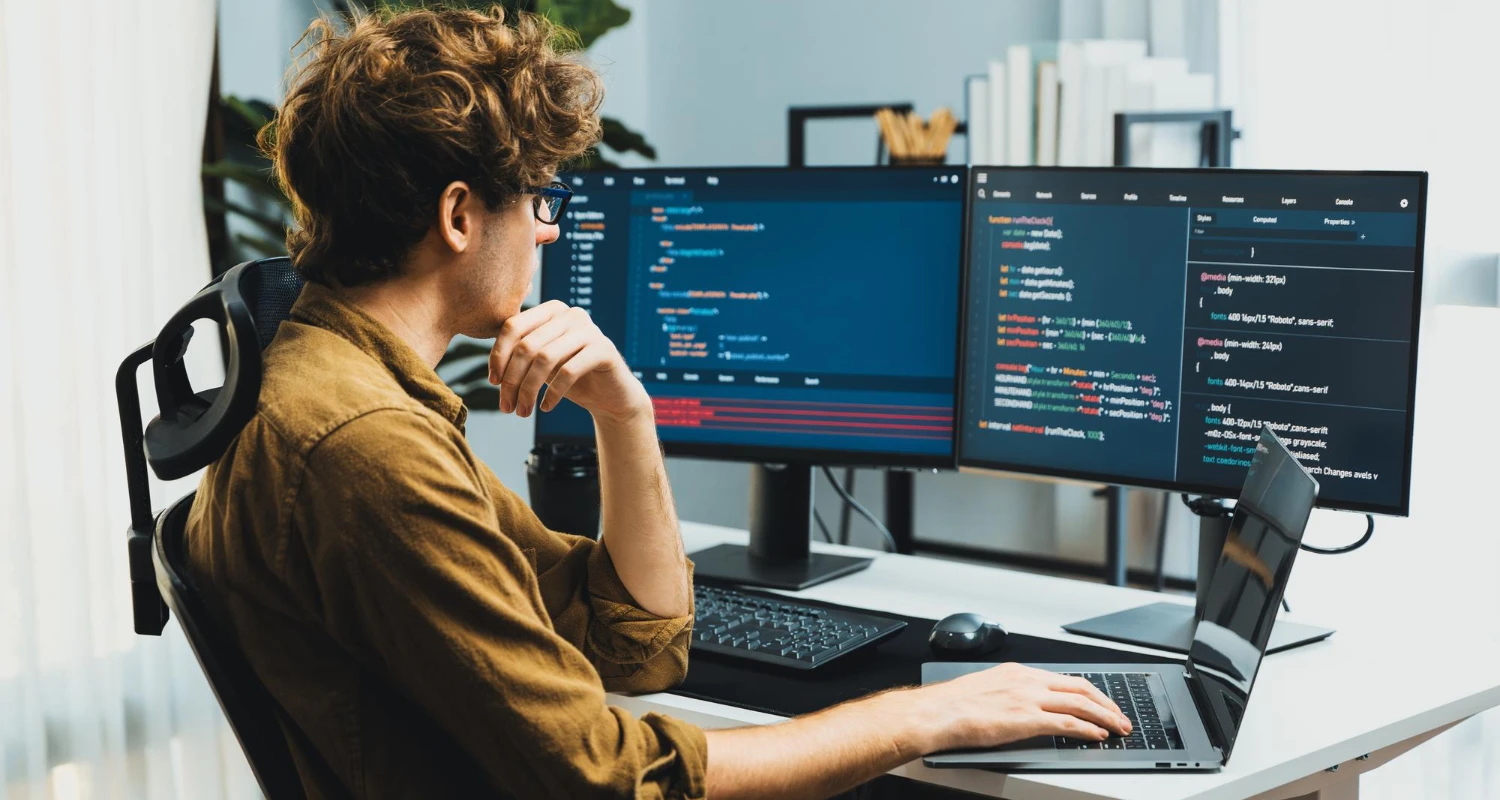
A New Dimension in Software Teams: AI as a Collaborative Partner
Artificial intelligence is reshaping the dynamics of software engineering teams, introducing new methods and efficiencies.
AI's Role in Enhancing Collaboration
AI has transitioned from a mere tool to a genuine collaborator in software teams. By aiding in various programming tasks like retrieving code snippets, running tests, and reviewing code, AI facilitates a working environment where human ingenuity and machine efficiency can coalesce. This integration into agile frameworks allows teams to harness AI as a trusted partner, paving the way for more innovative and productive development cycles.
This collaboration is particularly pronounced in how AI assists with code reviews and debugging processes. Instead of viewing AI as a competitor, developers are increasingly treating it as a colleague that enhances their capabilities. By identifying errors or suggesting code improvements, AI empowers developers to focus on creativity and strategic planning, tasks that require a human touch. This partnership ensures efficiency without compromising on the depth of human-driven insights and decisions.
Automating Mundane Tasks to Elevate Human Efforts
The capability of AI to automate repetitive tasks has revolutionized software engineering processes. By handling routine coding tasks, such as basic testing and initial debugging, AI allows developers to engage in more complex system design and problem-solving tasks. This transition frees up human resources for innovation and strategic decision-making.
For instance, in the continuous integration and deployment areas, AI tools simplify processes by automating redundant steps, thereby reducing errors and increasing deployment efficiency. The evolving practices ensure that while machines tackle mundane tasks, human engineers can focus on higher-value areas like creative solutions and leadership roles. Over time, this shift not only boosts productivity but also cultivates a more fulfilled and skilled workforce.
Restructuring Teams for AI Integration
Organizations are in a continuous process of restructuring teams to accommodate AI's growing influence. As AI tools become more prevalent, ensuring that team members are well-versed in AI technologies is crucial. This includes not only technical training but also fostering an environment that encourages adaptability, critical thinking, and strategic vision.
In a landscape where AI fluency becomes vital, team roles are evolving. While AI takes on more technical tasks, roles focusing on human-centered skills such as leadership and ethical oversight grow in importance. Such a restructuring ensures that while some functions become automated, new and more engaging opportunities emerge. The end result is a more cohesive, efficient, and innovative software development process.
Beyond Automation: Preserving the Human Element in Development
While AI brings numerous efficiencies, the human touch remains irreplaceable, underscoring the importance of collaboration.
Agentic AI: The Rise and Necessity for Human Governance
The progression towards agentic AI — systems capable of autonomously achieving objectives — highlights the need for oversight. Tools capable of understanding complex structures and automating debugging underscore AI's evolving sophistication. However, AI's capability to operate independently requires human intervention to configure settings correctly and ensure outputs align with project goals.
Despite AI's advanced capabilities, it occasionally stumbles due to minor setup errors or dependency mishaps, reiterating the importance of human management. As systems evolve into cognitive partners, governing these interactions becomes crucial. Humans need to understand not only AI's coding frameworks but also the broader impact of their decisions. This knowledge facilitates not just functionality but ensures that AI contributions are valuable and relevant.
AI as an Enhancer, Not a Replacement
AI's ability to transform software engineering is significant yet incomplete without human judgment. Data from software development repositories shows that large language models and AI agents are already enhancing code reviews and prototyping efficiencies. The evolution here involves a partnership paradigm where AI and developers co-evolve, valuing human oversight as essential to guide AI innovations.
This evolution transcends mere coding speed, influencing the choices in languages and tools that developers select, steering development towards an enriched synergy between human intuition and machine learning. The trajectory shows promise as human decisions remain central in both strategizing and validating AI outputs, sustaining a meaningful collaboration where both entities thrive symbiotically.
Industrial Applications of AI in Engineering
AI's integration is visible in industries like manufacturing, where real-time AI decision-making optimizes engineering workflows. By synthesizing substantial data, AI enhances productivity and sustainability while human engineers interpret AI insights to enact effective strategies. This collaboration model exemplifies how human expertise remains essential to contextualize AI's analytical prowess, ensuring real-world applications are both practical and strategic.
In such environments, AI furnishes insights and predictions, whereas human acumen actualizes these into feasible solutions, consolidating the AI-human alliance as pivotal in software engineering's future. This collaborative paradigm optimizes not just workflows but also supports innovation and sustainable practices essential for industrial advancement.
Navigating Challenges: Ethical and Security Considerations
As AI becomes endemic in software engineering, embracing ethical frameworks and security measures is crucial.
AI and Cybersecurity Dynamics
AI's role in cybersecurity is dual-sided. While effective in detecting potential threats through analyzing data patterns, it can also be a vector for sophisticated cyber-attacks if harnessed by malicious entities. Securing AI systems themselves becomes as critical as their integration into workflows.
AI can also identify code vulnerabilities through automated analysis, offering timely interventions before deployment. However, AI can occasionally introduce its own set of risks through unintentional errors in generated code. Therefore, developers must monitor AI outputs closely, ensuring validation processes catch missteps that could entail significant compromises.
Optimizing Data Governance and Bias Mitigation
AI systems rely heavily on quality data; biased input leads to flawed outputs. Establishing comprehensive data governance frameworks minimizes bias risks, especially in sensitive areas like fraud detection. Bias testing reinforces ethical implementation, ensuring AI-assisted decisions remain fair and unbiased.
Human developers also play a crucial role in supervising these systems, enhancing collaborative dynamics where creativity and ethical considerations supplement AI's analytic strength. Balancing machine capabilities with human insights paves the way for responsible AI deployment, supporting ethical and robust solutions.
Embracing AI: Preparing for the New-Era Software Landscape
As AI becomes increasingly integral, acquiring relevant skills is crucial for developers.
Key Skills for Embracing AI Tools
Proficiency in AI tools and frameworks is now essential in ICT roles, including mastering General AI, LLMs, and prompt engineering. These skills facilitate developers in leveraging AI tools effectively, augmenting existing workflows with machine-learning insights.
Developers must adapt to new paradigms that blend traditional coding with AI-enabled practices. The expertise demands a nuanced understanding of AI ecosystems, focusing on interoperability between AI systems and traditional development tools, enhancing productivity and addressing complex compute tasks efficiently.
High-Growth Roles and AI's Career Impact
AI proficiency opens career paths like AI/ML Engineer, Data Engineer, and NLP Specialist, roles with high growth potential due to the demand for developing and maintaining sophisticated AI models.
These professions require nuanced technical acumen and a strategic approach to harness AI's full potential, emphasizing skills in algorithm design, model implementation, and evaluation. Focusing on AI governance also provides expansive opportunities within corporate frameworks, establishing balanced, ethical, and innovative AI solutions in commercial ecosystems.
Foundational Skills and Human-Technology Synergy
Emphasizing human skills like critical thinking, creativity, and adaptability remains pertinent. As AI automates tasks, human ingenuity drives strategic thinking, broadening solutions that leverage both core engineering principles and creative problem-solving.
Embracing Uniquely Human Skills in an AI World
Even as AI automates technical tasks, roles dependent on empathy, strategic deliberation, and domain expertise continue to flourish. Ensuring AI complements rather than replaces these human capabilities is key to sustaining a balanced ecosystem where technology amplifies, rather than outpaces, human potential in software development.
Through integrating AI-driven insights without sidelining resourceful human interventions, software engineering progresses not merely as a discipline of technical acts but as a collaborative endeavor seamlessly blending art and science.
Question and Answer
-
What role does AI play in Agile software engineering methodologies?
AI is increasingly integrated into Agile methodologies to enhance efficiency and innovation. In Agile frameworks, AI acts as a collaborative partner by automating mundane tasks such as code generation, testing, and debugging, allowing human developers to focus on strategic planning and creative problem-solving. This collaboration fosters a dynamic environment where human intuition and AI's analytical prowess create a more productive and innovative workflow.
-
How is AI transforming the coding process in software engineering?
AI transforms the coding process by offering intelligent code suggestions, automating repetitive tasks, and enhancing code quality through advanced error detection and optimization. AI-powered tools can predict code patterns, suggest efficient algorithms, and even refactor existing code for better performance. This results in faster development cycles, reduced error rates, and improved overall software quality, enabling developers to concentrate on more complex and innovative aspects of software creation.
-
What are the benefits of using AI in testing and debugging within software development?
AI enhances testing and debugging by providing automated, continuous testing environments that quickly identify and rectify bugs. AI-driven tools can simulate numerous test scenarios, detect anomalies, and suggest code corrections, thereby increasing test coverage and reducing the time spent on manual testing. This automation leads to faster identification of potential issues and ensures a more robust and reliable software product.
-
How does version control benefit from AI integration in software engineering?
AI integration in version control systems offers predictive insights and intelligent conflict resolution, enhancing collaboration among developers. AI can analyse code changes, predict potential merge conflicts, and suggest resolutions based on historical data and patterns. This reduces manual intervention, accelerates the merging process, and maintains a consistent and error-free codebase, thus improving team efficiency and software delivery timelines.