From fear of running out to “it just works”
How the worry began
For years, many drivers pictured the same nightmare: a silent car, a dark road, and no socket in sight. Early models with modest capability and thin public support fed that story. Even people who had never sat in such a vehicle could recite second‑hand tales about friends of friends getting stuck. The phrase for this fear became a kind of cultural shorthand, more emotional than analytical, tied to memories of first‑generation products rather than what is actually parked on streets today.
What daily driving really looks like
Most people do not spend their lives on cross‑country journeys. Real‑world routines usually mean a loop between home, work, school runs, social visits, and shopping, with occasional weekend trips. For that pattern, modern ranges already overshoot needs by a wide margin. Many owners go several days without plugging in, because their typical mileage barely dents the battery. The scary image of watching a dashboard count down to zero rarely appears outside imagination.
Long trips as a planning problem, not a horror story
Extended journeys remain the hardest test, and they still weigh heavily in purchase decisions. Drivers imagine being stranded on a motorway shoulder, or searching a remote town for a socket that does not exist. Yet, as rapid hubs appear along major routes, the challenge is shifting from “will I make it?” to “where is the sensible place to stop?” Journey planning apps, in‑car routing, and denser networks now turn the worst‑case scenario into something closer to planning meal or restroom breaks.
Why experience dissolves fear
An interesting pattern appears in surveys: the most anxious voices usually come from people who have never owned such a vehicle. Among actual owners, worry tends to fade after a few weeks. Once drivers learn how far they really go in a day, and discover that plugging in becomes a habit like charging a phone, the old stories lose their grip. The central question moves from “will I run out?” to “does this fit my budget and lifestyle?”
Where you plug in reshapes everything
Home as the quiet game‑changer
Most public debate focuses on motorway hubs and shopping‑centre posts, yet the biggest shift often happens on a driveway or in a shared garage. Being able to plug in where you sleep changes “refuelling” from an errand into background noise. You park, go inside, and wake to a full battery. That rhythm turns the car into an appliance: always topped up, rarely thought about, making the entire experience feel calmer than sprinting to a pump when a warning light appears.
When you cannot install a socket
Not everyone can drill holes in walls or upgrade wiring. Renters, residents of older blocks, and people relying on street parking face extra friction. For them, decision‑making depends heavily on workplace options, local councils, and building managers. Shared posts in garages, kerbside stands, or reliable hubs near home can tip the balance. Without those, even an affordable model may feel too stressful, because every drive requires mental arithmetic about when and where to refill.
Public networks and new driving habits
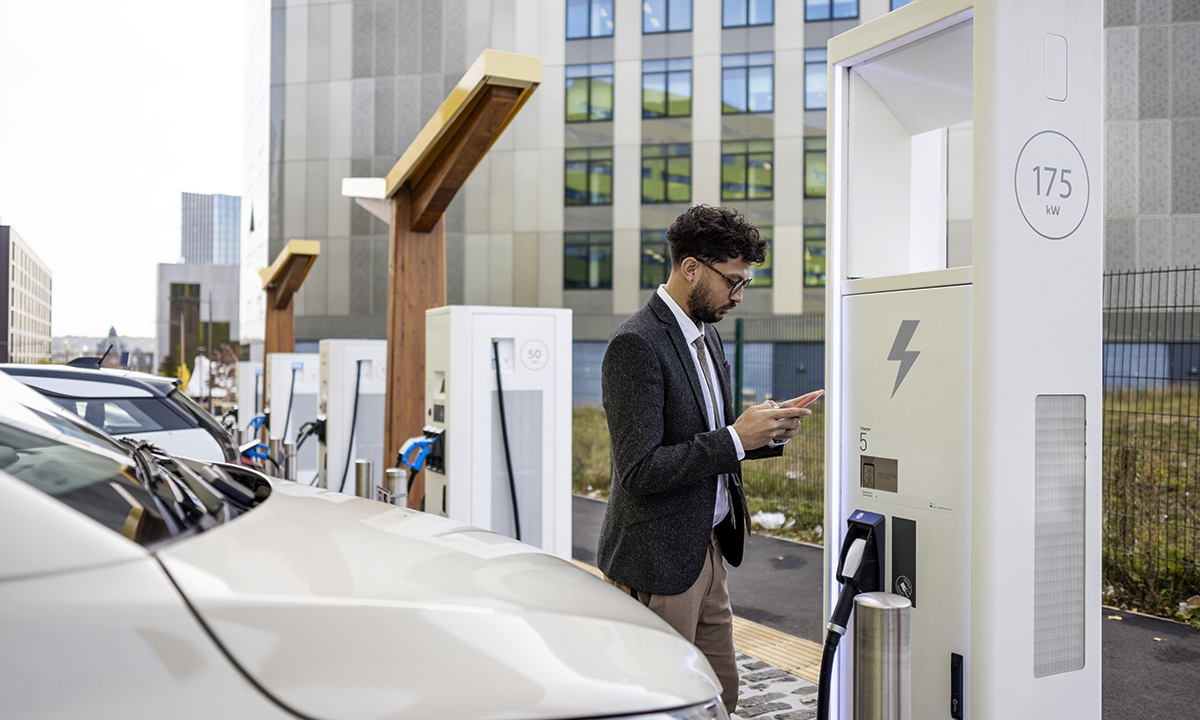
As public options spread through shopping centres, gyms, cinemas and motorways, behaviour adjusts. Instead of a dedicated “fuel run,” drivers top up while they do something else. A quick stop becomes a coffee break, supermarket trip or short walk. Stop lengths align with real life: slower posts at destinations, faster units along highways. Over time, seeing plugs everywhere lowers the psychological temperature even for people who still drive on petrol, because the idea of getting stuck feels less plausible.
| Everyday parking situation | Typical plug‑in strategy | Suitability for all‑electric ownership |
|---|---|---|
| Private driveway or garage | Overnight top‑up most days | Highly favourable; minimal lifestyle change |
| Shared building parking with posts | Regular scheduled refills | Good, if spaces are reliable and accessible |
| Street parking only | Relies on nearby public or workplace options | Mixed; workable where local support is strong |
| No regular parking spot | Ad‑hoc visits to rapid hubs | Challenging for many households |
Smart energy at home
Once a wall unit is installed, software and tariffs start to matter. Timers can delay refilling until cheap off‑peak hours, shrinking the “fuel” part of the household budget. Some homes pair rooftop generation or domestic storage with the car, effectively feeding it partly from their own roof. None of this needs daily attention once set up; yet across months the effect on running costs can be larger than any single visible rebate.
Money: what you pay, when you pay, and what you get back
Purchase price versus lifetime cost
Sticker prices still make headlines, but many owners in English‑speaking markets now look at monthly and multi‑year figures instead. Electric powertrains usually need fewer routine visits to workshops, have fewer moving parts, and avoid oil changes and many exhaust‑related repairs. Combined with cheaper energy per mile when plugged in at home, those factors can offset higher purchase prices over time, particularly for commuters who rack up considerable distance each year.
Incentives you barely notice
Visible grants at the time of purchase get most of the attention, especially when they arrive as credits that reduce the amount due. Yet a web of quieter support schemes also shapes the calculation. These can include partial refunds for home hardware, cheaper night tariffs, small bill credits for agreeing to smart‑charging programs, and local discounts on registration or certain fees. Each piece looks modest; together, they quietly drag the lifetime cost downward.
Care and upkeep: fewer surprises, different worries
Routine care tends to be simpler: no timing belts, spark plugs or exhaust systems. Brakes often last longer because of energy recovery during slowing. That said, new anxieties appear, particularly around battery longevity and the price of out‑of‑warranty repairs. Clear guarantees, transparent health reports, and specialist workshops help reassure buyers. Over time, as more high‑mileage examples remain on the road, fear of catastrophic failure is gradually giving way to more measured expectations.
Resale: a shifting landscape
Values for pre‑owned examples have moved quickly. In some phases, aggressive price cuts on new models and waves of lease returns dragged used prices down, worrying early adopters but opening a window for bargain hunters. As networks improve and more models prove durable, expectations of future value are stabilising. Shoppers increasingly see that depreciation risk cuts both ways: while some first owners lose more, second and third owners gain access to comparatively modern technology at approachable prices.
| Buyer profile | Most attractive option | Key financial question |
|---|---|---|
| High‑mileage commuter | New or nearly new with strong efficiency | How low can running costs go over five years? |
| Budget‑focused household | Pre‑owned with decent capability | Is the discount worth potential uncertainty? |
| Tech‑curious city driver | Smaller model with modest range | Does local support cover all daily needs? |
| Road‑trip enthusiast | Larger pack and rapid‑charge support | Are long journeys smooth and predictable? |
Real‑world owners: from stress to “no big deal”
How expectations differ from reality
People researching their first plug‑in often binge on videos and horror stories, bracing for complicated apps, long queues and panic at low numbers on the dash. Then they buy a car, live with it, and often discover that nothing dramatic happens. The rhythm settles into something almost boring: plug in, unplug, drive. Neighbours still fuel at stations; they rarely miss the experience.
What drivers actually complain about
Once the fear of running flat has faded, other issues come to the foreground. Owners grumble about software glitches, clunky touchscreens, limited physical buttons, or patchy support from certain charging networks. Some dislike having to juggle different cards and apps. Others mention wind noise, seat comfort, or boot space. In other words, the conversation shifts from survival questions to ordinary product criticism, the same way people talk about any other car.
When infrastructure still fails
The picture is not universally rosy. In areas where public posts are sparse, broken or regularly blocked, frustration can rise quickly. Drivers who cannot plug in at home and rely on shared or public sockets feel every shortcoming: outdated equipment, long queues on busy weekends, confusing pricing at certain locations. For them, a single bad evening can reignite old fears and colour attitudes for months.
Habit as the quiet hero
For drivers whose homes and regular routes are well supported, things move in the opposite direction. They build a mental map of reliable spots, learn how far their car really goes in winter versus summer, and find a personal comfort zone for the remaining‑charge number. After a while, the system recedes into the background. Decisions that once felt like leaps of faith become ordinary, almost invisible habits.
What actually tips people toward electrons
Convenience beating abstract worries
Long lists of specifications matter on paper, but everyday ease often decides the outcome. If plugging in fits naturally around sleep, work and errands, the car feels like an upgrade. If each refill requires detours and planning, shiny technology will not compensate. Many buyers in English‑speaking countries describe their final decision not in terms of ideology, but in terms of “This will just be simpler for me most days.”
Economics that show up on the monthly budget
Even those who care deeply about the environment usually compare numbers. When monthly payments, expected energy bills and upkeep estimates line up favourably against a petrol alternative, the choice becomes easier. Tax credits and other incentives act like a nudge, but the long‑term appeal comes from steady, predictable expenses that do not swing wildly with global fuel markets.
Social proof and quiet normalisation
Nothing calms nerves like seeing friends, relatives or colleagues living with the technology. A neighbour who has run their plug‑in for years without drama becomes more persuasive than official advertising. As more models appear in driveways and office car parks, the question subtly shifts from “Should I risk it?” to “Which one suits me?” That change in framing is a powerful sign that these vehicles are moving from novelty to normal.
A new baseline for future choices
As plugs spread, incentives evolve, and ownership stories accumulate, the benchmark for what counts as a “normal car” is slowly changing. Future shoppers may treat silent running, smooth acceleration and at‑home refuelling as standard expectations rather than special features. At that point, the decision will no longer be about taking a leap into some experimental technology, but about choosing among different flavours of an already familiar electric world.
Q&A
-
How does the availability of charging infrastructure influence long‑distance EV travel planning?
Robust public charging networks reduce planning complexity by shortening required detours, enabling dynamic route changes, and allowing drivers to optimize charging time around breaks instead of strictly around remaining battery range. -
What practical strategies help drivers cope with battery range anxiety in daily use?
Drivers can mitigate range anxiety by learning real-world range patterns, using eco‑driving modes, pre‑conditioning the cabin while plugged in, and relying on route planners that factor elevation, temperature, and traffic into consumption estimates. -
How can federal tax credits indirectly affect resale value trends of EVs?
Federal tax credits lower effective new EV prices, which can put downward pressure on used prices, yet strong policy support and growing demand for EVs with better batteries can help certain models retain or even improve their resale value. -
What should homeowners consider before installing home charging stations to optimize long‑term costs?
Homeowners should assess electrical panel capacity, off‑peak electricity tariffs, potential rebates, and whether to install a Level 2 charger, balancing upfront hardware and wiring costs against long‑term fuel and time savings. -
Why are EV maintenance costs and resale value trends increasingly linked?
Lower routine maintenance, fewer moving parts, and strong battery warranties can signal long‑term reliability, which improves buyer confidence in used EVs and gradually supports higher resale values compared with similar‑age combustion vehicles.