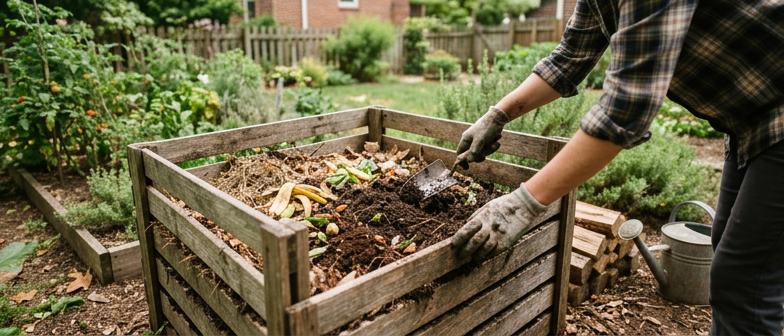
What Backyard Compost Science Is All About
Backyard compost science basics focus on how everyday organic scraps turn into a dark, crumbly material that helps plants grow. Compost is decomposed organic matter, such as fruit peels, coffee grounds, dry leaves, and grass clippings. Treating composting as a simple home science project helps you see how biology and chemistry work together in a small pile. By watching how materials change over time, you notice how air, moisture, and particle size affect the breakdown of food and yard waste into a soil-like amendment.
Seeing compost as part of the garden nutrient cycle shows why it matters. Instead of sending kitchen scraps and yard trimmings to the trash, you return those nutrients to the soil, where plant roots and soil organisms can use them again. This small loop in your backyard mirrors larger natural cycles on a scale you can observe and adjust. Paying attention to how your compost behaves lets you practice basic scientific skills, such as making observations, trying small changes, and spotting patterns, while managing organic waste in a practical, hands-on way.
How Organic Waste Breaks Down
In a backyard compost system, organic waste breakdown is a biological process that turns food scraps, leaves, and other yard materials into a dark, crumbly soil amendment. As part of backyard compost science basics, this transformation begins when you mix moist kitchen leftovers such as fruit peels and coffee grounds with dry materials like small branches or shredded cardboard. Together they form a habitat for microbes that use these materials as food and energy. Their activity drives the composting process, gradually changing a loose pile of scraps into a more stable material that looks and smells like rich soil.
The process usually starts with fresh food scrap composting, when bacteria that like moisture and simple sugars quickly colonize new material. They feed on nitrogen rich ingredients such as vegetable trimmings, grass clippings, and coffee grounds, along with carbon rich items like dry leaves and paper. As they consume this mix, they break larger pieces into smaller ones, release water and carbon dioxide, and generate heat. The rising temperature is a clear sign that decomposition has begun and that the pile has a workable balance of moist, nitrogen heavy ingredients and drier carbon sources.
Over time, the breakdown of organic waste passes from a very active heating phase into a slower curing stage. Early on, heat loving microbes dominate, and the pile may feel warm when you turn it. Regular mixing and slightly moist conditions let air reach deeper layers so organisms can keep working. Later, as easily digested material is used up and temperatures fall, other microbes, fungi, and soil organisms refine what remains into stable compost. By the end of this cycle, the original scraps are no longer recognizable, and you are left with finished compost that can be returned to the garden as part of a simple nutrient cycle at home.
| Decomposition Stage | What You Might See | Microbe Activity Level | Typical Materials Changing |
|---|---|---|---|
| Fresh mix | Recognizable scraps and leaves | Rising | Fruit peels, coffee grounds, grass |
| Heating phase | Warm pile, slight earthy smell | High | Soft yard waste, paper bits |
| Early curing | Finer, darker, still some pieces | Moderate | Small twig fragments, leaf veins |
| Late curing | Mostly crumbly, soil-like texture | Steady low | Last food scrap traces |
| Finished compost | Dark, loose, uniform crumbs | Stable | Blended kitchen and yard residues |
The Role of Carbon and Nitrogen Materials
In backyard composting, organic waste breakdown depends on balancing carbon-rich and nitrogen-rich materials. Carbon materials, or browns, include dry leaves, small twigs, shredded paper, and cardboard. They are usually dry and bulky, giving the pile structure and air spaces so microbes can move and breathe. Nitrogen materials, the greens, include fresh grass clippings, fruit and vegetable scraps from the kitchen, coffee grounds, and other moist food leftovers. These provide the proteins and energy soil microbes need to stay active, turning food scrap composting into a steady, ongoing process.
Soil Microbes and Other Compost Helpers
Backyard compost piles work because they are full of life. In backyard compost science basics, countless tiny organisms use food scraps, fallen leaves, and other organic waste as their food source. As they feed, they break complex plant and kitchen materials into simpler substances that plants can use. This ongoing recycling links your compost bin to the wider garden nutrient cycle by turning everyday discards into material that can support plant growth when returned to the soil.
Soil microbe activity drives most of this transformation. Bacteria and other microscopic life forms thrive in the moist, airy spaces between compost particles. They release enzymes that loosen plant fibers and convert carbon- and nitrogen-rich materials into more stable compounds. As they work, these microbes generate heat, which is why active piles can feel warm in the middle. Their changing populations over time, from fast-growing bacteria to more specialized organisms, help move a fresh mix of yard and kitchen waste toward finished compost.
Larger compost helpers support this microscopic workforce. Fungi spread through the pile in thin threads that handle tougher materials such as small twigs or dried stems. Invertebrates like earthworms, sow bugs, and springtails chew, shred, and tunnel, breaking materials into smaller pieces and mixing them with microbe-rich castings. Together, these creatures keep air and moisture moving through the compost, allowing the living community to keep cycling nutrients in your garden soil.
Microbial Activity You Can Observe at Home
Backyard compost science basics become real when you start noticing soil microbe activity with your own senses. In a simple home science project, you can compare a fresh mix of food scraps and yard trimmings with material that has been decomposing for a few weeks. Over time, the texture usually shifts from recognizable leaves and peels to finer, darker crumbs that look more like soil, showing that bacteria and fungi are breaking down organic waste. You may also see thin white fungal threads or tiny insects and other small creatures moving through the pile, all part of the living community that helps transform kitchen and garden leftovers into a useful soil amendment.
Compost Temperature and Moisture in Practice
In backyard compost science, temperature and moisture show what is happening inside the pile. As microbes break down organic scraps, they release heat, so a warming pile signals strong soil microbe activity and steady decomposition. Many home composters never use a thermometer, but they may notice that the center feels warm, especially after turning or adding fresh kitchen and yard materials. Watching these changes over time, even informally, lets you see the compost move from an active heating phase toward a slower curing stage, where the pile cools and begins to look like soil-like compost.
Moisture is just as important as heat because microbes need both water and air to function well. A simple squeeze test, where a handful feels like a wrung-out sponge, can guide you without special tools. If the pile dries out, microbial life slows and temperatures drop, while a soggy, compacted pile can lose oxygen and smell unpleasant instead of warming up. Noticing how warmth and moisture shift as you add dry browns, fresh greens, and food scraps teaches you how your backyard system responds and gives you a practical feel for compost temperature tracking as part of basic Backyard Compost Science Basics.
Q&A
-
What do people mean by backyard compost science basics?
It refers to observing how everyday organic scraps, air, moisture, and time work together so microbes can turn kitchen and yard waste into a dark, crumbly soil amendment. -
How does organic waste actually break down in a home compost pile?
Bacteria and fungi feed on food scraps and yard trimmings, using oxygen and moisture. As they eat, they break large plant pieces into smaller compounds until the pile becomes stable, soil-like material. -
Why is balancing carbon and nitrogen materials important?
Dry, carbon-rich materials like leaves add structure and air pockets, while moist, nitrogen-rich items such as fresh food scraps supply protein and energy. A mix of both keeps decomposition steady and helps avoid strong odors. -
What signs of soil microbe activity can I see in a home science project?
You may notice the pile warming, shrinking in volume, and changing color. Thin white fungal threads, small insects, and an earthy smell all suggest active decomposition and a working garden nutrient cycle. -
How can I track compost temperature and moisture without special equipment?
You can insert your hand or a simple thermometer into the center to feel warmth, and squeeze a handful of material. It should feel like a wrung-out sponge—damp but not dripping—for microbes to stay active.